What a team snack rotation actually has to do
A snack rotation for a youth sports team is more than a sign-up sheet. Its job is to keep every player fueled, make sure no parent is stuck bringing snacks twice, and avoid last-minute confusion. When allergies are in play, a rotation has to do more: it must keep dangerous foods away from the field, watch out for cross-contamination, and still let every family participate.
Most teams use a weekly or game-by-game schedule, assigning one family to bring snacks for everyone. This keeps things fair, but it only works if every parent knows the rules and the risk factors. The rotation should be clear, easy to check, and updated quickly if a family swaps weeks or a game gets rescheduled.
Many snack rotations also cover drinks or halftime fruit. In hot weather, teams may add extra hydration, ice water, sliced oranges or watermelon, or electrolyte drinks. Some leagues ask snack volunteers to handle postgame popsicles or a treat. Each of these needs separate planning, especially for children with allergies or sensitivities.
Keep reading: Background Checks and SafeSport Training for Volunteer Coaches
The nine major allergens a US label has to declare
Federal law requires packaged food sold in the United States to list nine allergens if they are present. These are: milk, eggs, peanuts, tree nuts, fish, shellfish, wheat, soy, and sesame. These ingredients must be called out in plain language on the package, either in the ingredient list or a separate statement.
Peanut and tree nut allergies are among the most common in young children. Milk and egg allergies are also frequent and can cause severe reactions. Sesame became the ninth required allergen recently, and it hides in breads, crackers, and hummus. Wheat and soy show up in many processed foods, from granola bars to sports drinks with added protein. Fish and shellfish are less likely to appear in snacks, but some unusual ingredients or flavorings may include them.
It's not just about reading labels. Cross-contact, when safe foods are prepared with the same utensils or surfaces as allergen-containing foods, can trigger reactions. For some kids, even a trace amount matters. Packaged snacks with "may contain" warnings can be risky, depending on the family's comfort level and doctor advice.
Why most leagues ban homemade snacks at the field
Many youth sports leagues have a clear rule: no homemade snacks. This policy protects children with allergies, and it makes snack duty easier to manage. When snacks come in sealed, labeled packages, parents and coaches can check the ingredients. If something contains peanuts or was made in a facility that processes nuts, it will say so on the wrapper.
Homemade treats are unpredictable. Even if a parent avoids obvious allergens, cross-contact can happen in a home kitchen. Flour dust can linger, a mixer used for cookies might spread traces of nuts, or packaging may not be available for ingredient checks. For children with severe allergies, this is a real risk. Leagues set a blanket rule to avoid dangerous mistakes and to level the playing field for everyone on the team.
This rule also helps with questions around food handling and hygiene. Packaged snacks have been inspected and sealed. In hot weather, they're less likely to spoil before the game ends. If a child has a reaction, it's easier to figure out what was eaten and what was in it.
Keep reading: Pitch Counts and Required Rest Days, by Age, for Youth Baseball
Building the rotation around two or three safe defaults
Every allergy-safe snack rotation starts with defaults: snacks that nearly every child can eat, and that parents can easily find. Typical choices are single-ingredient fruit, applesauce pouches, prepackaged pretzels, or plain popcorn. These are usually free of the nine major allergens and have clear ingredient labels. Many teams settle on two or three such options and ask each family to choose from the list when it's their turn.
Picking safe and available options
When choosing defaults, check with all families at the start of the season. If a player has a wheat allergy, skip pretzels and popcorn. For a child with a fruit allergy, offer a non-fruit alternative. Some teams stick to seedless grapes, clementines, or bananas for halftime fruit and pick one packaged snack for after the game. The goal is to minimize uncertainty and avoid substitutions on the fly.
Backups for when supplies run short
Sometimes the store runs out of your go-to snack, or a parent forgets until the morning of the game. Teams should agree on a backup option or two, like unsweetened applesauce cups or a specific brand of fruit snacks. If possible, post a picture or brand name on the rotation schedule so parents know what to buy. This prevents confusion and keeps the snack table safe for everyone.
Collecting allergy information without collecting medical files
Coaches and team parents need to know which players have food allergies, but they do not need detailed medical records. At the start of the season, send a simple survey: "Does your child have any food allergies or dietary restrictions?" Include a space to mention specific foods or types of snacks. Make it clear that this information is used only for snack planning, not for sharing beyond the team.
The goal is to get enough detail to avoid dangerous snacks, without putting families on the spot. Some parents may want to explain how severe the allergy is or mention cross-contact issues. Others may only want to list the foods to avoid. Respect both approaches. If a family prefers not to share details, ask for a list of "safe" snacks their child can always have.
Never put individual allergy details on a public team list or group chat. Instead, keep a master list for the snack coordinator and coaches. Remind snack volunteers about any restrictions the week before their assigned date. If the roster changes or a new player joins mid-season, update the list and notify upcoming snack families.
See how SnackRoster handles this for youth sports
Halftime fruit, postgame snacks and what heat does to both
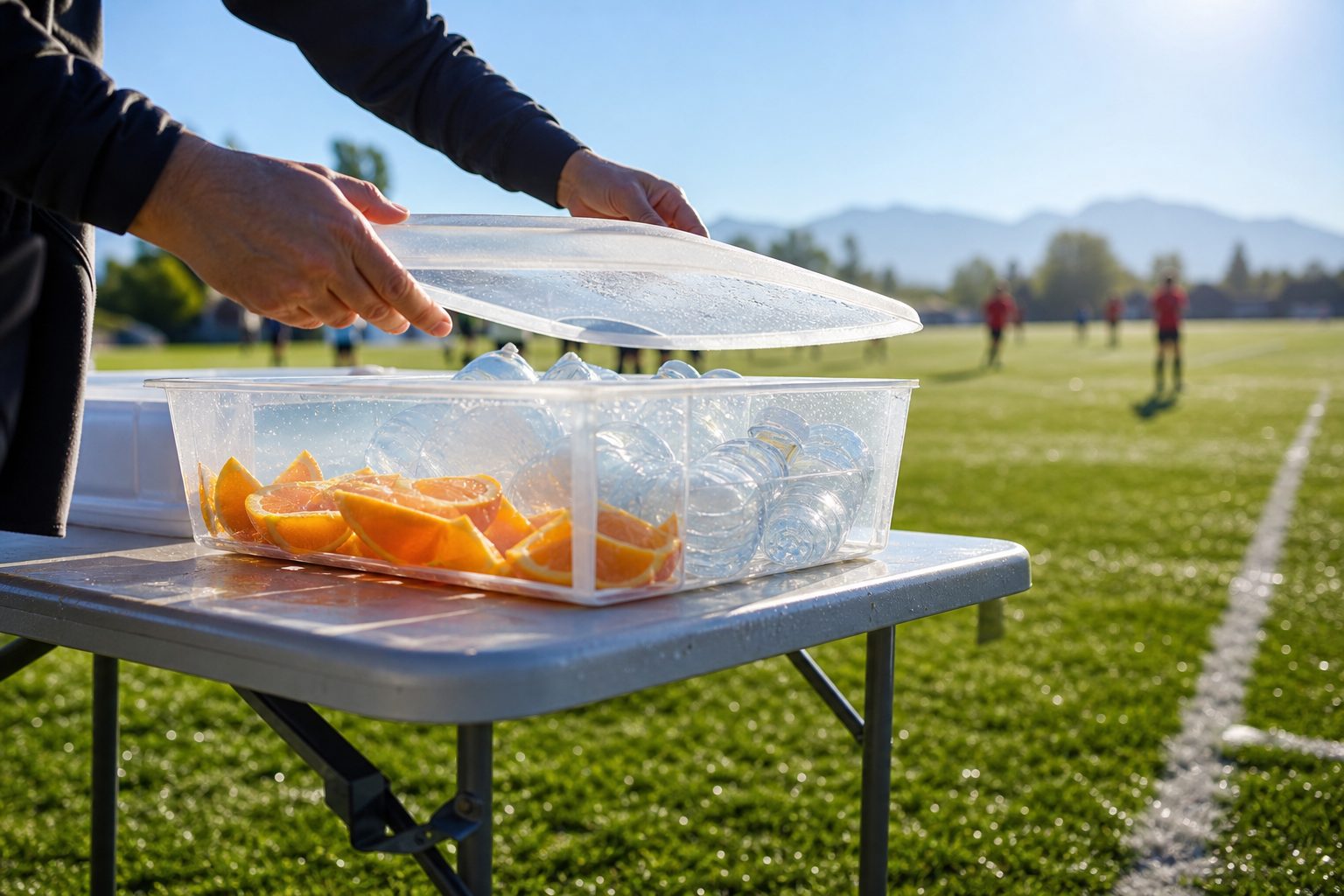
In spring and summer, snacks and drinks sit in hot cars or on the sidelines. Halftime fruit is usually fresh, sliced oranges, grapes, or small bananas. These can wilt or spoil in the heat, so pack them in a cooler or insulated bag with ice packs. Avoid cut fruit that has been sitting out for more than an hour, especially on hot days.
Packaged snacks are less risky, but not immune to temperature. Granola bars with chocolate chips can melt and make a mess. Cheese sticks or yogurt tubes can spoil if not kept cold. For outdoor games in warm weather, stick to shelf-stable snacks that hold up after a few hours outside. Applesauce cups, whole fruit, or pretzels are good choices.
Drinks matter too. Water is always safe, but some children need electrolyte drinks for long games or tournaments. Check labels for allergens, especially soy or milk in "protein" drinks. Avoid sports drinks with added protein unless you know every child can have them. For popsicles, look for allergen-free brands and keep them in a cooler until the final whistle.
When a family brings the wrong thing, and how to handle it on the spot
Mistakes happen. A parent might forget the allergy list, grab a box of cookies with nuts, or bring cupcakes from the bakery. When this happens, step in quickly but calmly. The priority is to keep every child safe, but also to avoid embarrassing the volunteer who made the mistake.
Discreet correction and safe alternatives
If you spot the problem before snacks are handed out, quietly pull the parent aside. Explain which ingredient is a risk and why you can't serve it. Most parents will understand, especially if you have posted the allergy policy all season. If possible, offer an alternative: a stash of backup snacks, fruit from the cooler, or a quick call for help from another family on the sideline.
What to do if a risky snack is already served
If the wrong snack is already in players' hands, act fast but stay calm. Announce that snacks need to be swapped out for safety, and collect the risky items. Hand out a safe backup instead. For severe allergies, check with the affected family immediately and follow any emergency plan they have shared. Document the incident and let the league know if a rule was broken.
After the game, update the team about what happened and remind everyone of the safe snack rules. Encourage families to double-check their week's snack before leaving home. Mistakes can be teaching moments for everyone, and a calm, clear response helps build trust.
Closing the loop: making a snack rotation that lasts the season
A safe and fair snack rotation depends on three things: clear rules, good communication, and a reliable schedule. Collect allergy information early, share it as needed, and remind families before their snack week. Build the rotation around two or three safe options, with backup choices when needed. Keep homemade foods off the list, and give every family the tools to succeed.
Managing all these moving parts can be tough, especially with busy families and changing schedules. A tool that builds the rotation, sends reminders, and tracks allergies takes much of the pressure off, so team parents can focus on supporting the players on the field.