Seven in the morning: nets, corner flags and the lining crew
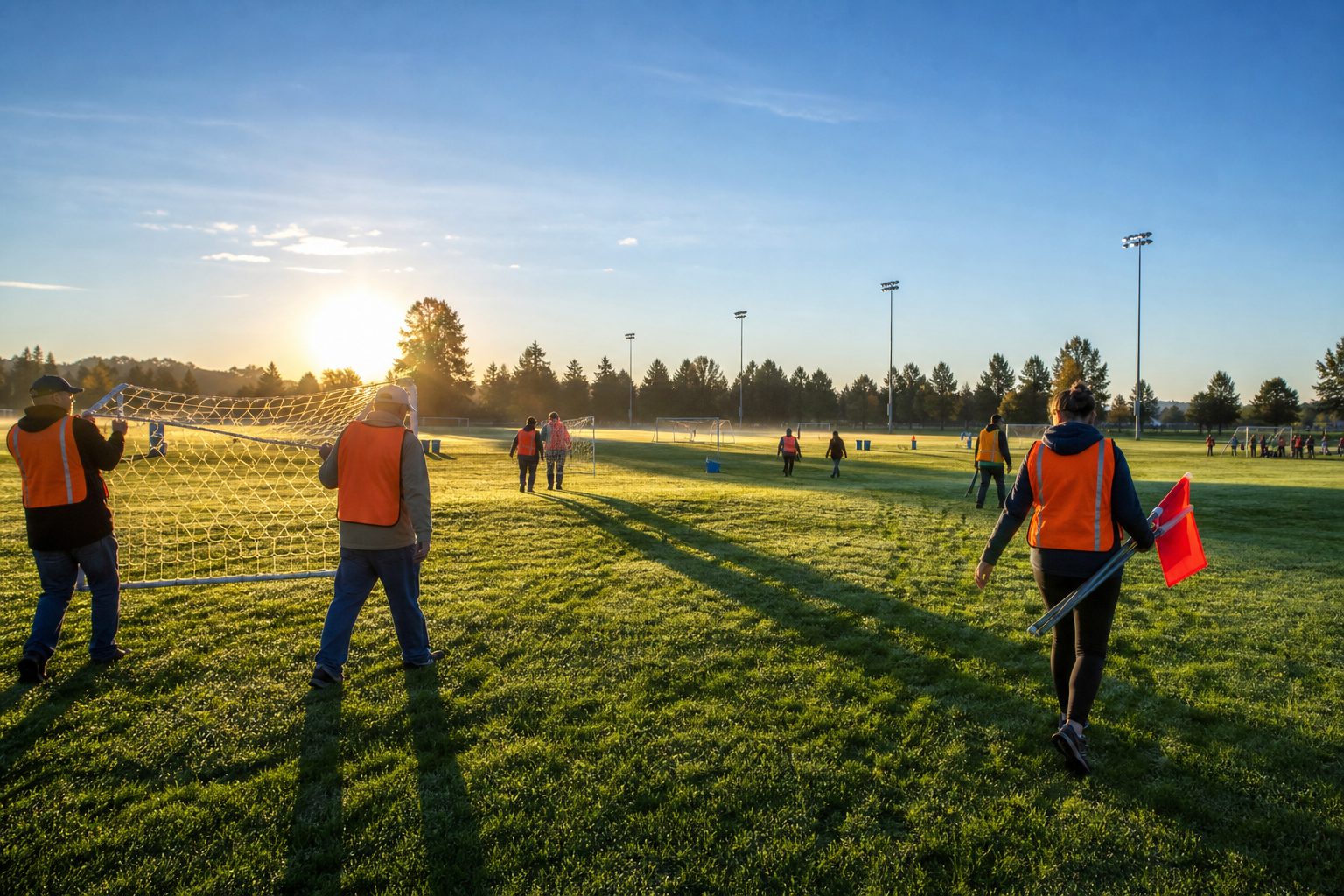
The parking lot is mostly empty at seven, but the first volunteers have already started. Every field needs nets tied, corner flags set, and lines checked. The gear is stored in a shipping container at the edge of the complex. There is a printed checklist taped to the door, but the real instruction comes from last season's crew chief, who talks the new parents through each step while the kids stretch nearby.
The nets are the least forgiving. Some fields have goals that stay out all season, but many leagues require that goals be moved and locked up each night. This means the first job is to roll them into place, anchor them with sandbags, and fit the nets to the frame. Bungee cords are common, but on windy mornings, you find yourself untangling ropes and patching holes from last week's mishaps. One rope short and the whole goal sags.
Corner flags come next. Most clubs use a PVC pole with a spike at the base. You walk the perimeter, push them in, and double check for rocks or holes. On wet mornings, the flags can sink or lean, so there is some stomping and shimming with old shinguards. There are always a few missing or broken, and someone makes a run back to the container.
The lining crew works fast. Some complexes hire a contractor to repaint the lines once a week, but the touch-up falls to parents. Dragging a line marker across dew-soaked grass is never as easy as it looks. The chalk clogs, the wheels slip, and you end up with a line that curves toward the sideline or disappears entirely at a sprinkler head. It is cold work, but it sets the stage for every game to follow.
Keep reading: The Youth Referee Shortage: Why Your Game Time Keeps Moving
The field marshal's radio and what actually comes over it
The field marshal is usually a parent with a clipboard, a radio, and a bright vest. They walk the grounds all day, answering questions and solving problems. The radio is their lifeline, but what comes over it is rarely what the league handbook describes.
Most calls are about lost items: a water bottle at Field 7, a phone at the bleachers, a wallet in the grass near the restrooms. Next are field assignments, when a team shows up at the wrong field or a referee is missing. Sometimes coaches call in to request extra time for warmups, though the answer is always the same: stick to the schedule.
Then there are the weather updates. In most states, the league has a lightning protocol. When thunder is heard, the field marshal relays the five-mile rule and starts the clock for a thirty-minute delay. On hot days, there are reminders about water breaks and shade tents. When a problem escalates, an injury, a fight, a missing child, the radio connects straight to the league director or on-site security. The marshal is the switchboard, and the job never stops.
Referee check in, game cards and the two minute delay that cascades
Referees arrive with their own routines. The check-in table is usually near the concession stand. Each referee signs in, collects their whistle, and picks up game cards for each match. The league expects every game to start on time, but a single late referee can throw off a whole morning's schedule.
If a referee is five minutes late at Field 3, their game starts late, which means the field runs behind all day. The field marshal tries to shuffle assignments, but there are only so many certified refs, especially for the older age groups. Game cards must be filled out before play: team names, jersey numbers, coaches' signatures. Parents and coaches wait, watching the clock, anxious not to lose field time.
When the delay hits, it ripples. Parents get frustrated. Coaches complain. The next teams line up on the sidelines, waiting for their turn. The two-minute delay becomes ten minutes by noon, and by the last games of the day, everyone is behind. The paperwork is simple, but the time lost is not easily regained.
Keep reading: How One Rec League Made Duty Shifts Stick With a Refundable Bond
Parking, spectator lines and the coaches who stand where they should not
Parking at a twelve-field complex is never enough. Early games fill the first row, and by ten o'clock, parents circle for spots or park along the entry road. The volunteers in yellow vests try to direct traffic, but tempers flare when someone blocks an aisle or parks on a median.
Spectator lines are another headache. Most leagues use cones or rope to mark the "parent line" three yards from the field. Some parents ignore it, setting up chairs right at the touchline. Younger siblings run across the field at halftime. The marshal walks the perimeter, reminding everyone to stay back and keep clear for players and referees.
Coaches are supposed to stay in the technical area, but the temptation to pace the line is strong. Some stand with their toes on the field, barking instructions. The referee gives a warning, but it takes a second or third reminder to keep everyone where they belong. The field marshal steps in when words run out, always with a smile but sometimes with the authority of the schedule behind them.
The concession window and the health department rules behind it
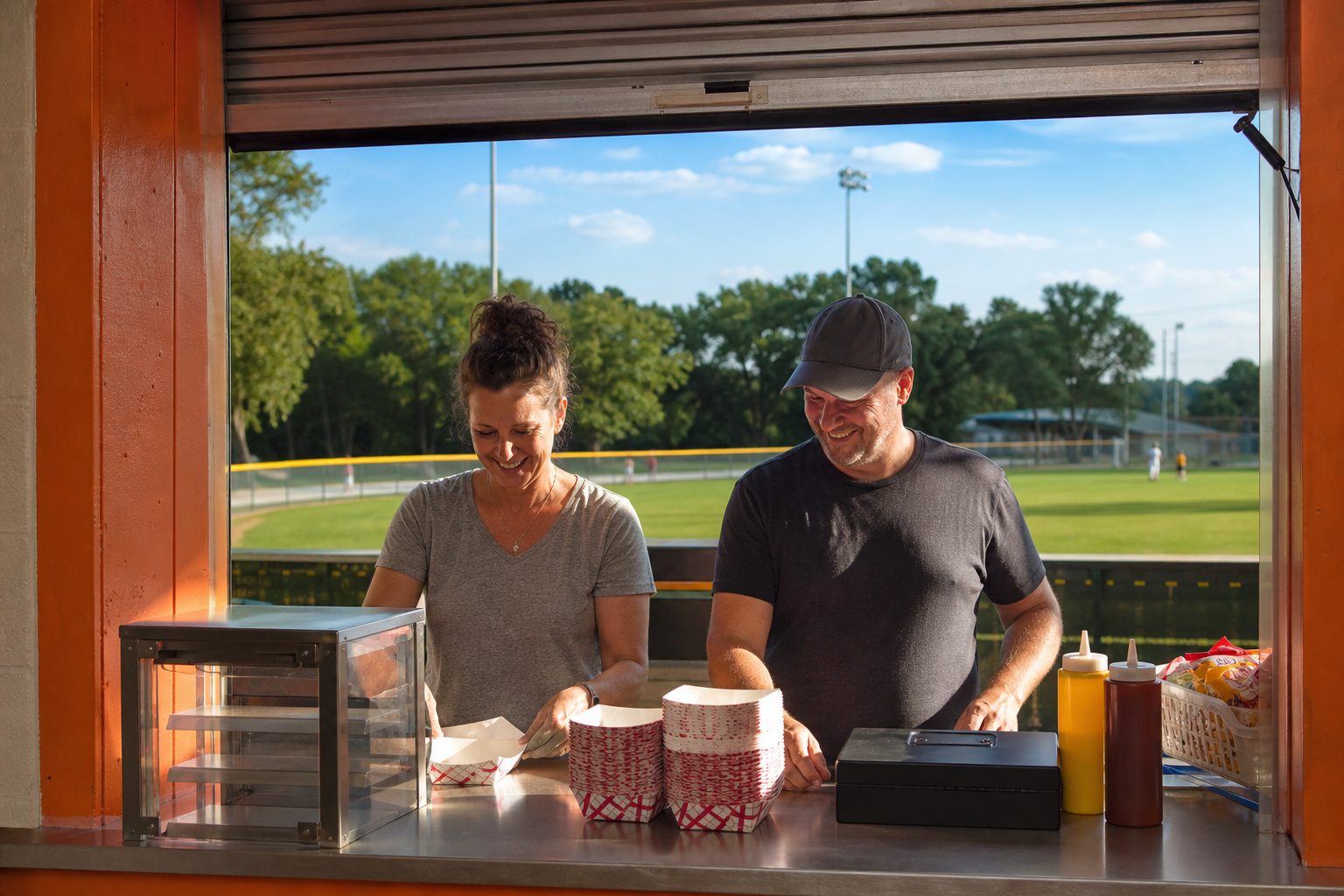
The concession stand is the hub for snacks, coffee, and a few hot items. It is run by volunteers, but the rules are set by the county. Every item must be stored at the right temperature. Gloves are required for anyone serving food. There are printed instructions by the sink for handwashing, and a logbook for temperature checks.
Most teams donate snacks or drinks, but anything prepared on site must meet health codes. That means no homemade baked goods, no fresh-cut fruit unless packaged from the store. The hot dog roller needs to be cleaned every two hours. Volunteers must check the thermometer in the fridge and fill out a checklist before opening the window. Health inspectors can drop by without warning, and a violation means the stand closes for the day.
The register is old, but it works. Cash goes in a lockbox, and card readers are common now. At the end of the day, the cash is counted, the fridge is wiped down, and leftovers are stored or donated. The rules are a headache, but they keep the window open and the line moving.
See how SnackRoster handles this for youth sports
Halftime fruit, water jugs and the trash that was never on anyone's list
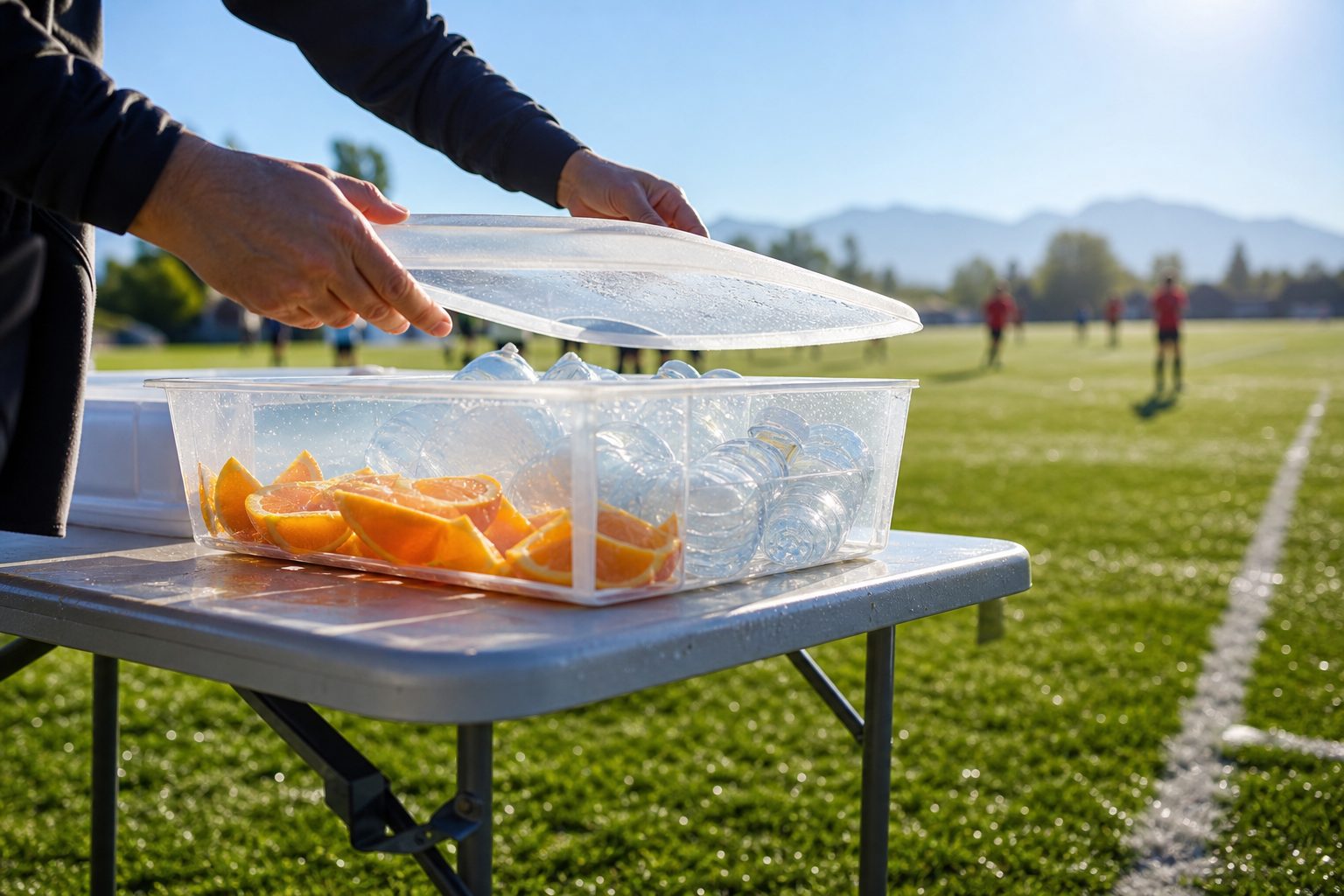
At halftime, the scramble begins. One parent brings orange slices, another arrives with a cooler of grapes or watermelon. The kids crowd around the bench, grabbing fruit and water. Few remember to bring their own bottles, so extra cups are pulled from the concession stand. Someone always forgets napkins, and sticky hands find their way onto jerseys and ball bags.
Water jugs are heavy and often go missing. The field marshal finds them behind the goals or left at the previous field. On hot days, volunteers refill them from the concession sink, waiting in line behind the coffee pot and the handwashing crew. There are never quite enough cups by the third game of the day.
Trash piles up quickly. Each field has a can, but the wind tips them over and wrappers scatter across the grass. Empty cups, fruit rinds, and stray socks find their way to the sidelines. Volunteers try to keep up, but at the end of the day, there is always more: half-eaten fruit, sticky bottles, and forgotten shoes. Trash pickup is nobody's favorite job, and it is almost never listed on the duty roster.
Injuries, ice and the incident report
Minor injuries are part of every Saturday. Most are scrapes, twisted ankles, or a ball to the face. Each marshal carries a first aid kit with ice packs, bandages, and antiseptic wipes. For bumps and bruises, a cold pack and a sit on the bench usually do the trick.
Serious injuries are rare, but the procedure is strict. The field marshal assesses, calls for help if needed, and fills out an incident report before anyone leaves. If an ambulance is called, a league official contacts the family and documents the details. The report is filed with the club for insurance and review. The packet includes the player's name, the coach's account, and signatures from witnesses. It is paperwork, but it protects everyone involved.
Heat-related issues have become more common. On hot days, there are reminders to take water breaks and check for signs of exhaustion. Volunteers keep an eye out for kids who look pale or dizzy. If a player cannot return to the game, the field marshal makes a note and follows up before the next match. The ice chest is always close by, and the incident forms are never far from hand.
Four in the afternoon: teardown, lost and found, and the handoff to next weekend
By four, the last whistle blows and teardown begins. The nets come down first, rolled and stacked for storage. Corner flags are pulled, wiped, and sorted. The lining machine goes back in the container, and leftover chalk is swept from the walkways. Any broken gear is tagged for repair during the week.
Lost and found grows as the day goes on. By afternoon, there are bags, jackets, water bottles, and sometimes even dogs waiting at the marshal's table. Volunteers log each item, but most are never claimed. At the end of the season, a parent with a pickup hauls the leftovers to a local charity or thrift store.
The final step is the handoff. The marshal checks the duty sheet, notes what needs restocking, and updates the next team on any issues. The trash is bagged, the field swept, and the container locked. The day ends with tired smiles, a few complaints, and a promise to do it all again next weekend.
None of it happens without planning, reminders, and a clear rotation of duties. A tool that builds season-long rosters and sends automatic reminders can keep every job, nets, snacks, carpools, and even trash, covered, so no task is left off the list.