What the 2017 SafeSport Act requires and which organizations it reaches
The Protecting Young Victims from Sexual Abuse and Safe Sport Authorization Act of 2017 brought sweeping changes to youth sports across the United States. The law applies to any adults who participate in a national governing body's (NGB) program, including local leagues that are affiliated with organizations like US Soccer, USA Baseball, and USA Basketball. This includes both paid staff and volunteers, such as team coaches and managers.
The Act requires all adults with regular contact with minors to complete training on preventing abuse, as well as to undergo background checks. It also establishes mandatory reporting: if anyone involved suspects abuse, they must report it to law enforcement and the U.S. Center for SafeSport. Failure to do so can result in penalties for both the individual and the organization.
SafeSport compliance now means more than keeping an eye on the field. It is a legal requirement for every volunteer coach, assistant, and team parent who takes on a supervisory role. Even if your team is run through a local rec league, if that league affiliates with a national governing body, the SafeSport Act applies.
Keep reading: Pitch Counts and Required Rest Days, by Age, for Youth Baseball
How the rules travel down from US Soccer, USA Baseball and USA Basketball to your local club
National governing bodies serve as the link between federal requirements and the day-to-day operations of your local team. Each NGB creates its own compliance program to meet the SafeSport Act. These programs set the training, screening, and reporting standards for all member organizations down the chain.
That means your local league or club does not set the rules from scratch. Instead, it implements the policies pushed down by its national affiliate. For example, US Soccer requires background checks and SafeSport training for all coaches, even volunteers. Leagues under USA Baseball or USA Basketball have similar policies, though the exact process and training platform might differ.
The requirements are usually spelled out in the annual registration or coach onboarding packet. Clubs that do not follow the guidelines risk losing their affiliation, insurance, and permission to participate in sanctioned tournaments. Often, your club administrators must certify every year that all adults in contact with athletes are cleared and trained, or they face sanctions from the NGB.
Name based database scans versus fingerprint based criminal history checks
Background checks for volunteer coaches can take several forms. The most common are name-based database searches and fingerprint-based criminal history checks. Each has strengths and weaknesses, and the requirements can depend on both the NGB and state law.
Name based checks
Name-based searches compare a person's name and date of birth against national and state criminal databases, sex offender registries, and sometimes local court records. These searches are quick and inexpensive, and they catch the majority of disqualifying offenses. Most national youth sports organizations rely on this method for their annual screening.
Fingerprint based checks
Some states and certain organizations require fingerprinting. This method is more accurate, as it is harder to evade with an alias or typo. Fingerprint-based checks tap into FBI and state databases and are often required for school-based programs or youth-serving organizations in states with stricter laws. The downside is cost and logistics: volunteers may need an appointment at a local police department or third-party vendor, and results can take longer.
In most cases, unless state law demands fingerprinting, your club will use a name-based system provided by a national vendor. However, if your state or district has more stringent laws, you may have to complete both types before you are cleared to coach.
Keep reading: Stop Play Checklist: Lightning, Heat and Head Injury Calls
Where state volunteer screening law adds its own requirements
State laws can build on top of federal and NGB requirements. Many states have written their own statutes on volunteer screening for youth sports, sometimes going further than what the national groups require.
Some states mandate fingerprint-based checks for all adults working with children, regardless of organizational policy. Others specify how often checks must be repeated, which databases must be searched, or require additional disclosures. A few states also require that volunteers complete state-specific child abuse prevention training or register with a state-run system in addition to the national checks.
Clubs and leagues must follow the strictest applicable rule. If your state requires more than the NGB, the local club has to comply with both. This often means extra paperwork at the start of each season and, in some cases, added fees paid either by the volunteer or the club.
It is not unusual for a coach who volunteers for both a school district and a travel club to need to complete separate checks to satisfy each entity's rules. This can seem duplicative but is rarely waived, as state agencies and national sports bodies do not always share clearance records.
The rest of the certificate stack: abuse prevention, concussion and cardiac arrest training
Background checks are only one part of the compliance checklist. Most organizations require additional certifications that address other facets of athlete safety.
Abuse prevention and SafeSport training
Training in abuse awareness and prevention is required for every adult in a position of trust. The SafeSport program, backed by federal law, provides the standard curriculum. It covers recognizing grooming behavior, setting appropriate boundaries, and steps for reporting concerns. Most organizations require new volunteers to complete the full course, followed by a shorter refresher each year.
Concussion training
All fifty states have youth sports concussion laws setting mandatory education for coaches and, in many places, parents and players. These laws require annual training on signs and symptoms of concussion, the need for prompt removal from play, and protocols for safe return. National organizations often provide approved online courses, and some states specify a particular training provider.
Cardiac arrest (Sudden Cardiac Arrest) training
Several states now require coaches to complete an annual course covering the risks and warning signs of sudden cardiac arrest in young athletes. This training typically lasts fifteen to thirty minutes and can be paired with other preseason requirements. At minimum, volunteers learn to recognize red-flag symptoms and know when to call emergency services.
Some organizations also request first aid or CPR certification, though this remains less common for volunteer coaches outside of travel or select teams.
See how SnackRoster handles this for youth sports
How long a clearance lasts and who is responsible for renewing it
The expiration of a background check or training certificate depends on the specific requirement and local implementation. Most name-based background checks used by youth sports organizations are valid for one year. Fingerprint checks, when required, may last two to five years, but a club will often insist on annual rescreening to avoid any lapse.
SafeSport training generally requires a full initial course, followed by an annual refresher. Concussion and cardiac arrest certifications are almost always annual. Some states or organizations set their own timelines, so a coach working in several programs may have to track multiple expiration dates.
Responsibility for renewal is shared. The club or league must ensure that every coach is up to date before authorizing participation. Most organizations send reminders in the months leading up to expiration, but ultimately the volunteer is expected to complete renewals before the deadline. Missing a deadline can result in removal from the team roster and a gap in coverage for the club.
Many clubs now require all certifications to be current before issuing a coach badge, giving out team equipment, or allowing access to practice fields.
Who may see a result, and how disqualifications are handled
Background check results are treated as sensitive information. Most national screening vendors return only a pass or fail status to the club or league, not the underlying details. In some cases, if a disqualifying offense appears, a designated club official or compliance officer may need to review the findings and make a determination or appeal.
Disqualifying offenses typically include any felony involving violence, abuse, or sexual misconduct, as well as certain drug or theft convictions. Each NGB publishes a list of automatic disqualifiers, and many follow national guidelines or state law in setting these standards. If a volunteer is disqualified, they are notified and given the opportunity to challenge any incorrect information, usually by working directly with the screening vendor.
Most organizations have an appeals process for borderline cases, such as older convictions or charges that do not meet the automatic bar. However, for crimes against children or sexual offenses, there is almost never an exception. Disqualified individuals are not permitted to coach, drive, or supervise youth in any capacity with the club.
Clubs are required to keep records of completed checks and training but must handle them confidentially. Only those with a need to know, such as the compliance officer or registrar, have access to full records.
Wiring screening into registration so no uncleared adult runs a practice
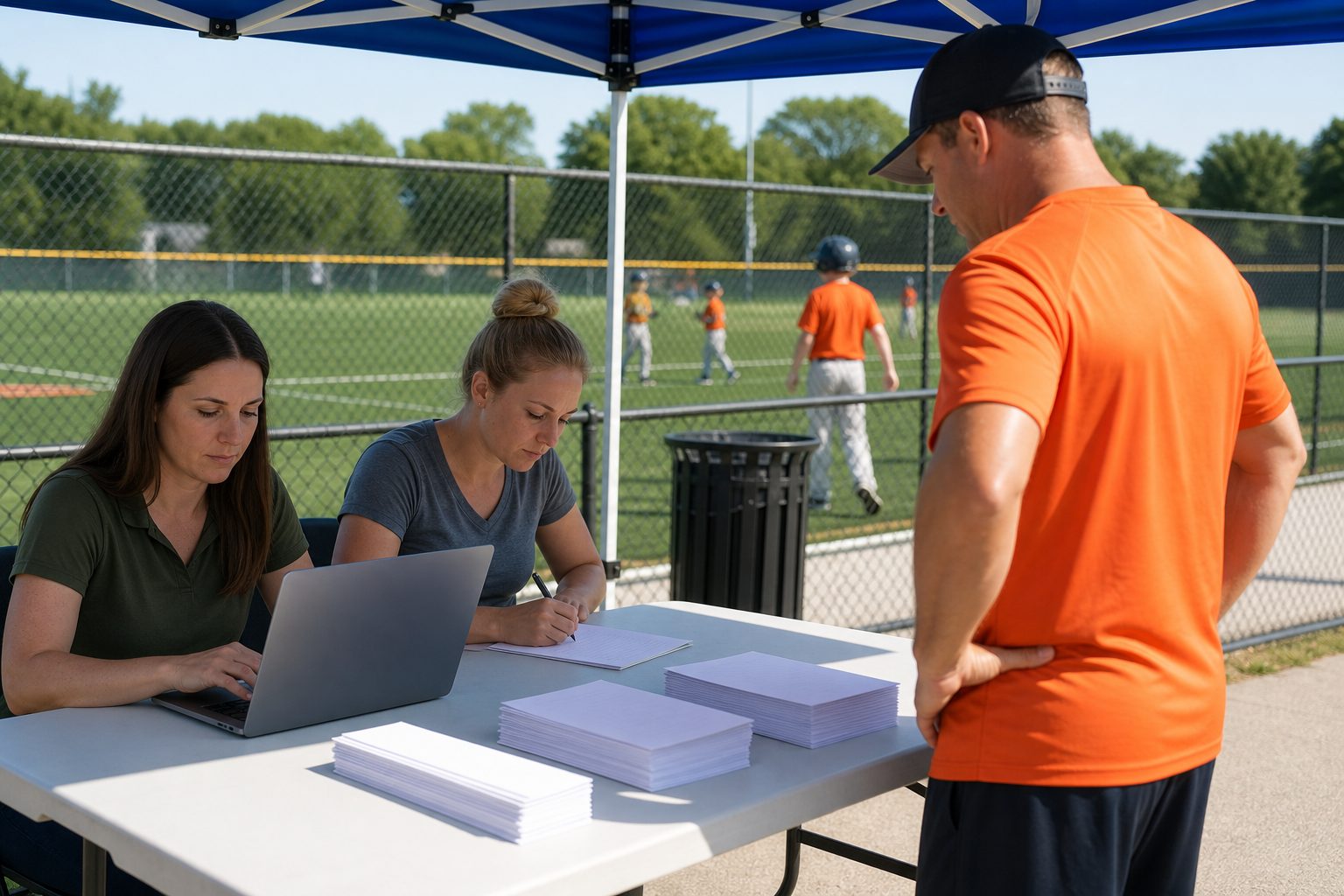
The best-run clubs and leagues integrate background checks and training requirements directly into their registration process. This approach prevents any adult from slipping through the cracks and joining a practice or game without being fully cleared.
Online registration platforms now offer modules that require completion of screening before a volunteer can be assigned to a roster. Some systems will not issue a coach pass or allow access to team contact lists until the required steps are finished. This helps clubs track renewals and ensures no one is left unscreened due to paperwork delays.
Automated reminders play a critical role. When certifications approach expiration, system-generated notices prompt volunteers to complete their refresher courses or background check renewals. This reduces administrative workload and limits last-minute scrambles before the season starts.
For clubs that coordinate not just coaches but also snack duty, carpool rotations, or field volunteers, an integrated compliance tool ensures that every adult with access to players is properly screened and trained. The right platform can handle these layers, keeping teams safe and compliant with every rule from federal law down to local club policy. SnackRoster's season rotation builder, combined with automated reminders, helps ensure that volunteers managing snacks, rides, or practice support meet all clearance and training requirements before they step onto the field.