Assuming the league policy covers your personal vehicle
Many youth sports parents and coaches trust that the league's insurance policy automatically covers all carpool rides. That is a risky assumption. Most youth leagues carry general liability insurance, but this policy usually protects the league itself, not individual drivers using their own vehicles. When an accident happens on the way to a game or practice, your personal auto insurance is the front line. If your policy excludes "business use" or you are carrying more children than your coverage allows, your claim could be denied.
After an incident, families often discover that the league's policy only fills gaps after the driver's own insurance is used up. For most everyday accidents, that backup never comes into play. It is wise to check your personal policy, confirm who it covers, and ask your agent about carpooling. Some insurers consider regular team driving as "livery" or "ridesharing," which may be excluded. Sharing these facts with other parents at the start of the season helps everyone understand their actual protection.
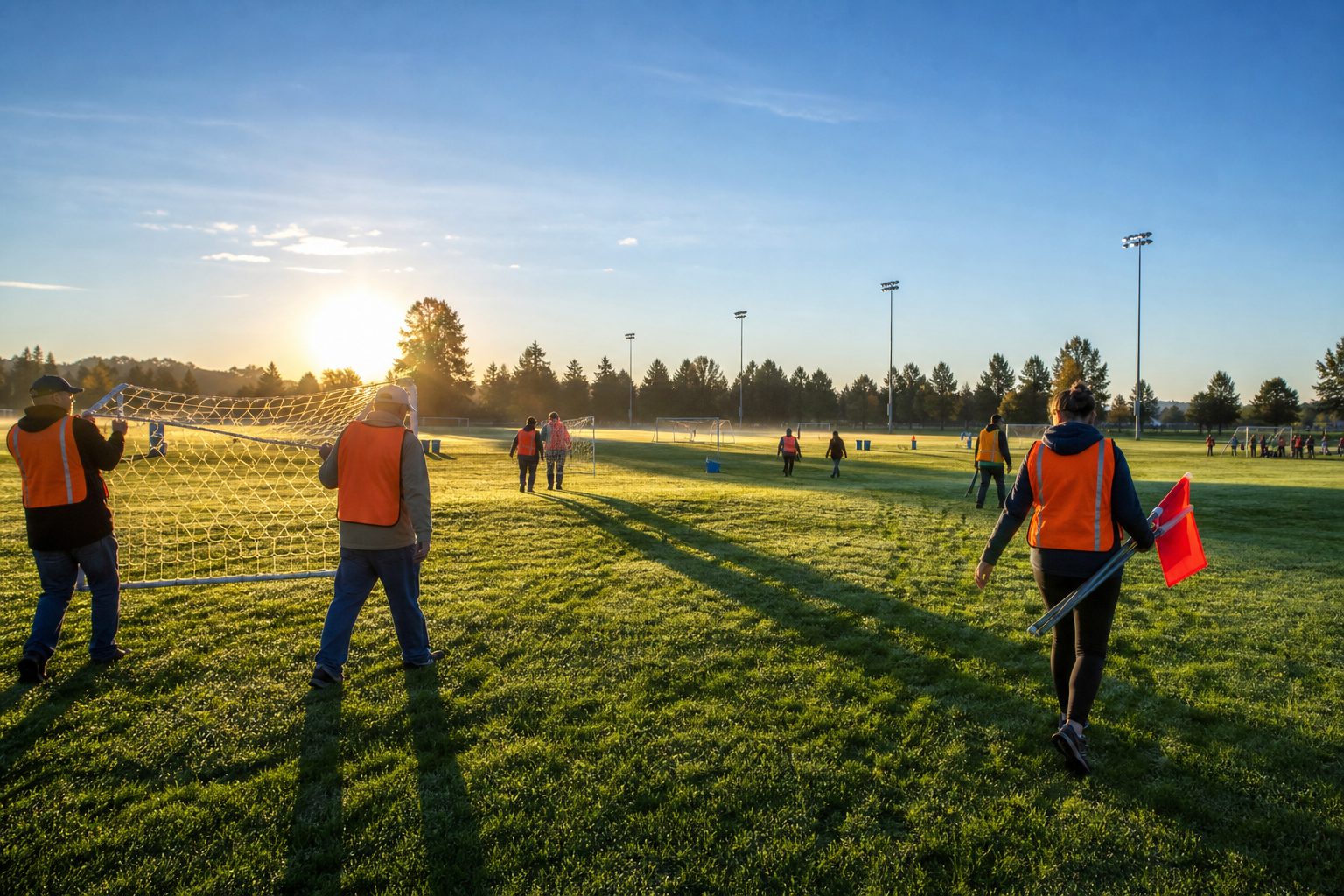
Keep reading: A Saturday on Field Duty at a Twelve Field Soccer Complex
One adult alone in a car with a child who is not yours
Many leagues have a "rule of two": at no time should one adult be alone with a single child who is not their own. This standard exists to protect both children and adults from risk. Even a simple ride home can put an adult in a difficult situation if there is an allegation of inappropriate behavior or if an emergency occurs and there is no witness.
Some organizations require that another unrelated adult, or at least two children, be present in the vehicle. This can seem like overkill for teams that know each other well, but problems usually come up in the exceptions, when someone is running late or a parent cannot make it. Make this a hard rule for your team and put it in writing. Plan pick-ups so that no driver is ever alone with a single non-family child, even for a short leg of the route.
Ignoring the booster seat and belt rules that follow the child's height and weight
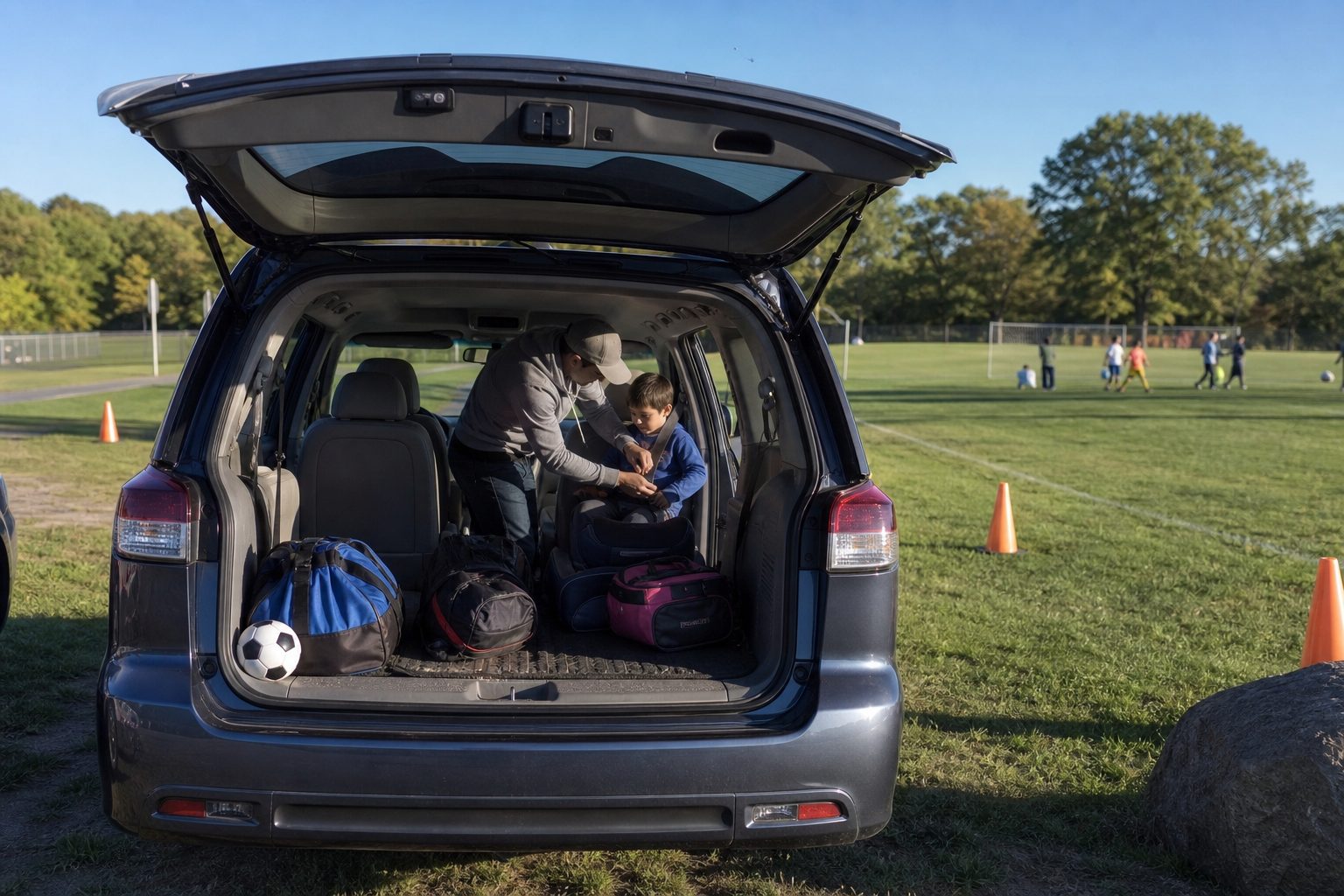
Child passenger safety laws are set by each state, but most require booster seats or car seats for children under a certain age, weight, or height. Too often in carpools, a parent assumes a child is big enough to skip the booster, or they forget to bring one altogether. If you are pulled over or, worse, if there is a crash, failing to use the right restraints can result in fines and liability claims.
The rules are not just for toddlers. In many states, children must use a booster seat until they are at least 8 years old or 4 feet 9 inches tall. Do not rely on "he's tall for his age" as an excuse. Every driver in the rotation should know each child's requirements and make sure the right seat is available for every trip. Parents can label seats with names, or keep a spare in their car. Double-check before every ride, not just on day one.
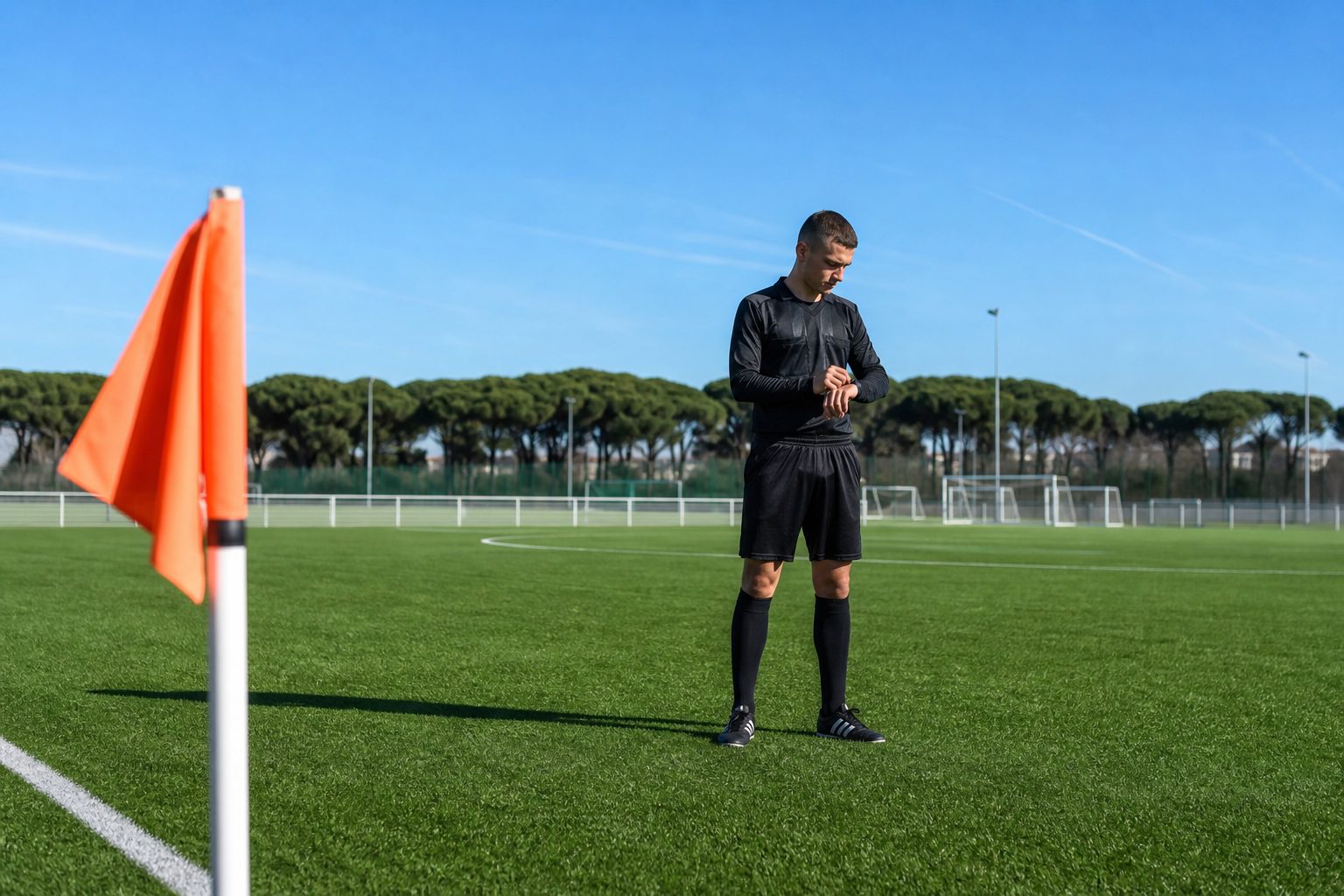
Keep reading: The Youth Referee Shortage: Why Your Game Time Keeps Moving
No written permission on file naming who may drive whom
Verbal agreements are not enough when it comes to transporting other people's children. Many schools and youth leagues now require written permission slips that list approved drivers for each child. This document can help in the event of an accident, traffic stop, or custody dispute. It also makes sure all parents know who will be driving their child, closing the door on misunderstandings.
A best practice is to collect a signed form from every family before the first carpool. The form should name each approved adult and their relationship to the team, such as "Jane Smith, Emily's mom." Coaches and team parents should keep a folder of these forms, digital or paper, easily accessible at every game and practice. This step can feel bureaucratic, but it protects everyone involved when memories get fuzzy or emergencies happen.
Building a rotation that ignores work shifts, siblings and the far side of town
Creating a fair carpool schedule is harder than it looks. Parents often start by drawing a simple rotation: each adult drives in turn. But this model breaks down quickly. Some parents work late shifts; some have multiple children on different teams. Others live far from the fields or are out of town many weekends.
Ignoring Work Schedules
A parent who works until 6 PM cannot reliably pick up for a 5:30 practice. If the schedule does not account for work hours, gaps and last-minute scrambles are inevitable. Ask every parent for blackout times before setting the rotation. A quick group text is not enough; get it in writing and update it if someone's schedule changes.
Forgetting About Siblings
Families with more than one child in sports have unique challenges. A mom might have to get one child to soccer and another to dance at the same time. If the rotation overlooks these conflicts, missed rides and late arrivals pile up. Consider sibling schedules when mapping out who can drive and when, and try to pair families with similar routines.
The Problem of Distance
The classic "across town" problem sinks many carpools. If one family lives much farther from the field or everyone else, making them drive as often as others is not fair. It may make sense to split the carpool into zones, or have the outlier drive only when it works for them. Keeping the rotation flexible, but consistent, reduces stress and resentment.
See how SnackRoster handles this for youth sports
Last minute swaps that nobody writes down
It is tempting to swap carpool duties at the last minute with just a text or a call. Maybe Grandma is in town or someone's work meeting runs late. But if only two parents know about the change, the rest of the group is in the dark. This is how kids get forgotten, driven by someone not on the permission list, or left waiting for a ride that never comes.
To avoid confusion, every substitution should be recorded in a shared system. This can be a group chat, a spreadsheet, or a dedicated carpool app. The key is that all parents and coaches can see who is driving each day. If there are any changes, update the record immediately. Consistency prevents panic and keeps accountability clear.
The ride home from a tournament that no family ever claimed
Most teams plan the basic carpool loop: home to field and back. Tournament days are a different beast. Early morning departures, scattered hotel rooms, and tired kids at the end of a long day lead to confusion. Many teams forget to assign drivers for the return trip. This can leave kids stranded or force a volunteer to take on an unplanned late-night drive.
When building the carpool schedule for tournaments, always assign both outbound and home drivers, plus a backup in case a family leaves early or stays late. Clarify who is responsible for each leg of the trip, and get confirmation in writing. Having a tournament-specific plan avoids the "whose car is my child in?" problem that plagues many teams after a long day on the road.
A one page carpool agreement families will actually sign
Every team needs something more than a handshake. A one-page carpool agreement sets expectations and outlines the rules: who can drive, child safety seat requirements, the "never alone" policy, and what to do about schedule changes. Keep it simple, use plain language, and focus on the basics.
Families are more likely to sign, and follow, a short, clear agreement than a packet of legalese. Make the form easy to access, fill out, and update. Post a copy for every parent to see, and revisit it if team members or circumstances change during the season. This agreement is not about mistrust; it is about keeping everyone on the same page and protecting the team's sense of community.
Organizing carpools, snack duty, and volunteer shifts takes time and patience. The most consistent teams use a single tool to build their season schedule, send automatic reminders, and track changes. This keeps parents informed, reduces last-minute confusion, and helps everyone stay focused on the game instead of the logistics.