The 30 30 rule and how long the fields stay closed after the last strike
Lightning is a clear and present danger in youth sports. The standard rule is simple: if you see lightning and hear thunder within thirty seconds, play must stop, and everyone should clear the field. The "30 30 rule" means you start counting as soon as you see a flash. If you hear thunder before you reach thirty, the storm is close enough to strike.
Once a game or practice is halted for lightning, the clock starts over with every new strike. Fields remain closed for at least thirty minutes after the last flash or rumble. Restarting the count is key. If you see or hear another strike at twenty-nine minutes, the thirty-minute waiting period starts again from zero.
This rule is about distance and unpredictability. Lightning can strike more than ten miles from a storm cell. The only safe place is a substantial building or a hard-topped vehicle. Dugouts, tents, and pavilions do not qualify. Coaches and parents should know the nearest real shelter before the first whistle.
Text chains and weather apps can help, but the final call is always on-site. Do not let the pressure to resume early override the safety clock. The risk of a direct strike or ground current is real, even under clear skies if thunder is present.
Keep reading: Rec League or Club Travel Team: What Actually Changes at Home
Who has authority to suspend a game, and who only thinks they do
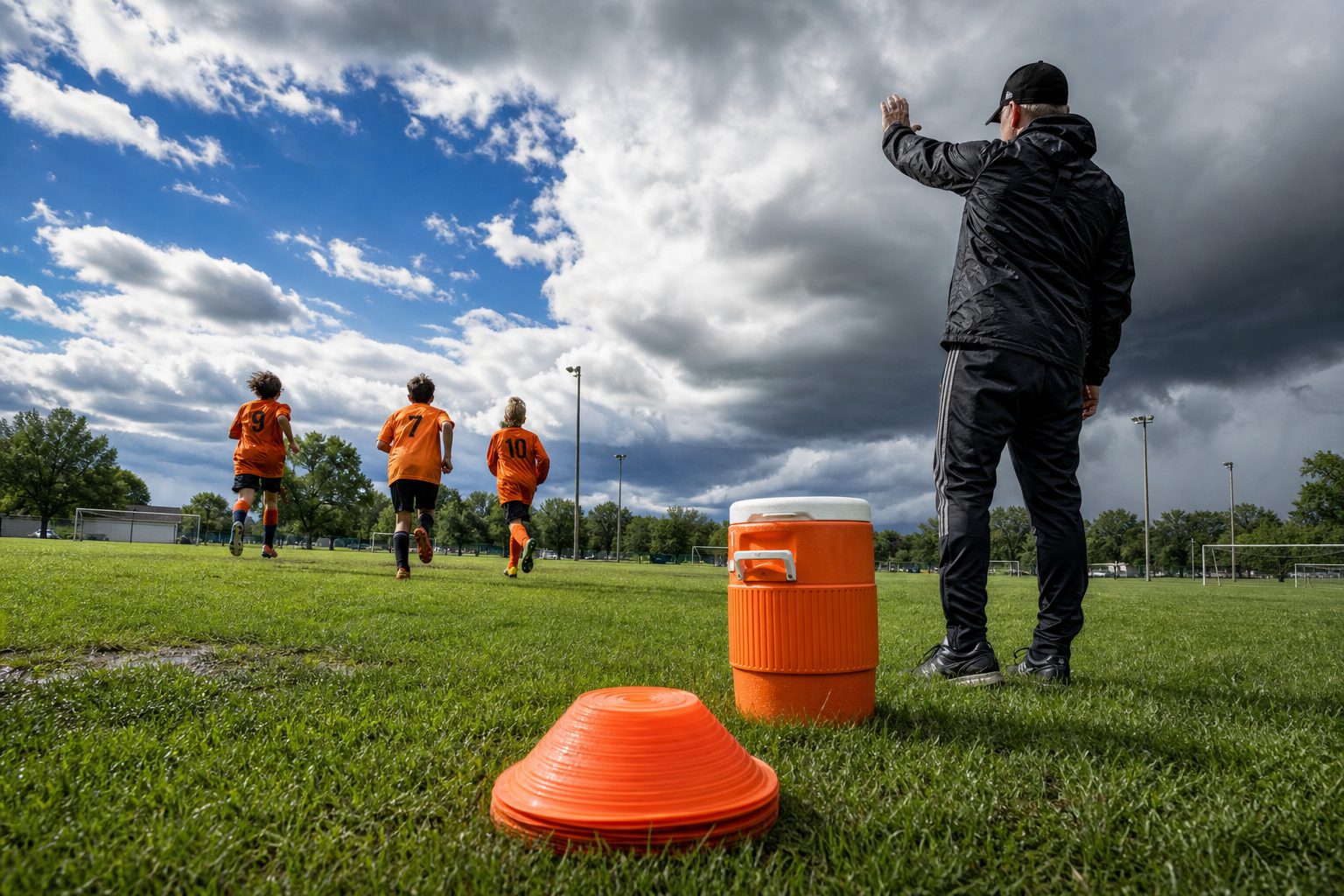
Stopping play for safety is not a group debate. In most leagues, the referee or umpire has the official authority to suspend a game in progress. For practices, the head coach or field supervisor usually carries the responsibility. League policy or park management may also have the final say, especially when weather is involved.
Parents, team volunteers, or assistant coaches may notice a threat first, but they cannot override the official decision once play starts. However, any adult can start the conversation if they see danger. It is better to speak up early than to miss a warning sign.
Some fields have lightning detection systems or automated alerts. Where these are in place, the system's alarm may trump human judgment. If your park uses such a system, know what the signals mean and who monitors them. The system may clear the field even if the sky looks clear.
Remember, the person who calls off play may face pushback. Remind your volunteers and parents that erring on the side of caution is the standard. If in doubt, clear out.
Reading heat with a wet bulb globe reading instead of the thermometer
Thermometers only tell part of the story on hot days. Direct sun, humidity, wind speed, and radiant heat from turf all affect risk. That is why many leagues now use the Wet Bulb Globe Temperature (WBGT) to set safety thresholds. WBGT measures how heat feels to the body, factoring sun and humidity in addition to air temperature.
A simple weather app or car dashboard reading is not enough for safe decisions on high-heat days. Handheld WBGT meters are now common on the sideline. Some schools and parks have permanent sensors. If your league uses WBGT, the guidelines usually set reporting intervals and action levels for practice and play.
A WBGT reading in the caution or danger zone triggers mandatory water breaks, shortened sessions, or full cancellation. It is possible to have air temperatures in the low nineties, but a WBGT reading that requires play to stop. Do not rely on old habits for heat calls.
If you do not have a WBGT device, use heat index charts, but err on the conservative side. Full sun and little breeze mean higher risk, even if the thermometer seems moderate.
Keep reading: Carpool Mistakes Youth Teams Make, and the Fixes That Stick
Work to rest ratios, water breaks and the signs that end a practice early
When the heat is up, the schedule must change. Work to rest ratios are about the balance between activity and recovery. As WBGT or heat index climbs, activity periods grow shorter and rest periods longer. For example, youth soccer in moderate heat may mean ten minutes of play followed by five minutes of rest in the shade.
Hydration is not optional. Set up water stations where all players can reach them, and require breaks at least every fifteen to twenty minutes in warm weather, more often if the WBGT is high. Do not wait for kids to ask.
Warning signs and early stops
Heat illness can present as headache, dizziness, confusion, cramps, or nausea. If any player shows these signs, stop play immediately and move them to a cool, shaded area. Remove helmets or excess gear. If symptoms persist or worsen, call for medical help. Parents and assistants should know these signals and be ready to act.
Never push through. Cancel or end early if players look sluggish or stop sweating. Heat exhaustion can escalate quickly, especially in young athletes.
Immediate removal after a suspected concussion, and the same day return ban
Head injuries can be subtle but serious. The standard across youth sports: if a player takes a blow to the head or shows signs of a possible concussion, they come out of the game or practice immediately. This is not negotiable. Coaches, referees, and even parents can flag a suspected concussion.
Symptoms may appear right away or develop over minutes or hours. Watch for confusion, slurred speech, dazed appearance, memory loss, or balance problems. Even one of these is enough for immediate removal.
No player suspected of concussion is allowed to return the same day, regardless of how quickly symptoms seem to clear. This is now law in nearly every state, not just a best practice or league rule. "When in doubt, sit them out" is mandatory.
Teammates, volunteers, and parents should know the signs and support the decision to remove a player. The pressure to "get back in" is common but must be resisted.
See how SnackRoster handles this for youth sports
The written clearance your state return to play law requires
Return to play after suspected concussion is governed by state law for youth sports. The standard requirement is a written clearance from a licensed healthcare provider trained in concussion management. A verbal "all clear" from a parent or coach does not meet this rule.
Most states require that this clearance be on a signed form, with the provider's credentials and date. The player cannot participate in practices or games until the document is received and on file with the team or league.
Many leagues now require coaches to collect and submit the clearance to a league official before the player rejoins. Some states also require a graduated return to play protocol, which outlines a stepwise increase in activity under supervision.
Check your state law and league policy. Forms are often available from your state athletic association or league office. Keep copies of completed forms as part of your team records. Returning a player too soon is both unsafe and a violation that can carry penalties.
Sudden cardiac arrest, the AED location and the three minute problem
Sudden cardiac arrest can strike without warning, even in young athletes. Quick response is critical. The survival rate drops sharply with every passing minute after collapse. The goal is to begin CPR and use an Automated External Defibrillator (AED) within three minutes.
Know ahead of time exactly where the nearest AED is located at your field or gym. Some parks have one in the concession stand, others in the main building or at the scoreboard. If your venue does not have an AED, the nearest one may be at the school or a nearby business. Find out before your first event.
Assign a team adult to check the AED location, access hours, and maintenance status at the start of each season. Make sure more than one person knows how to use it. Many leagues now require at least one coach per team to complete CPR and AED training.
The three minute challenge
In an emergency, time is measured in heartbeats. Have a plan to get the AED to any playing area in under three minutes. Practice "AED drills" just as you do fire drills. Assign roles for calling 911, starting CPR, and retrieving the device.
Post the AED location and emergency numbers where all coaches, players, and parents can see them. Do not assume someone else knows the plan. Clarity saves lives.
What belongs in the duty bag before the first whistle
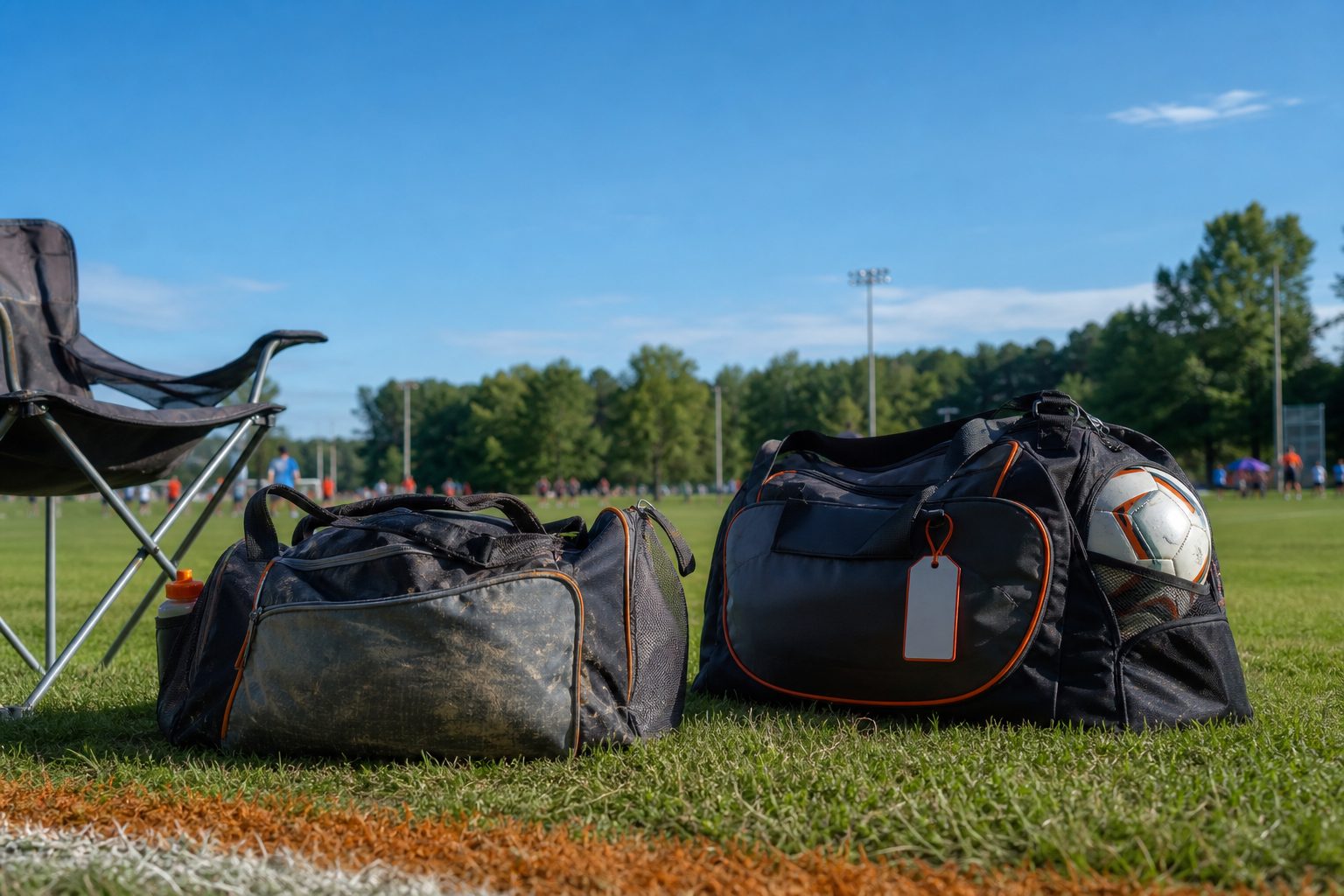
A well-stocked duty bag is the silent partner of every safe youth sports event. Start with a basic first aid kit: adhesive bandages, gauze, antiseptic wipes, ice packs, and elastic wraps. Add instant cold packs for sprains and bruises. Include nitrile gloves for anyone assisting with injuries or blood.
For heat and hydration, bring extra water bottles, electrolyte packets, and cooling towels. A portable shade like a pop-up tent or large umbrella can make a big difference, especially for tournaments or double-headers.
Pack a copy of your emergency contacts, team medical forms, and current player rosters. If your field has an AED, include a printed map showing the exact location. For lightning, keep a small weather radio or a phone with a reliable radar app.
Concussion assessment cards, sometimes called "pocket cards," should be in every coach's bag. These provide quick reference for symptoms and required actions if a head injury occurs.
Finally, add a clipboard or notepad for tracking incidents, noting who left the field, and documenting clearance forms. Staying organized in the small details makes it easier to manage a crisis if it comes.
For parents managing snacks, carpools, and volunteer rotations, staying ahead of the schedule is also a safety issue. A tool that builds duty rosters and sends reminders can keep everyone on the same page, ensuring that the right adult and the right supplies are ready on every game day.